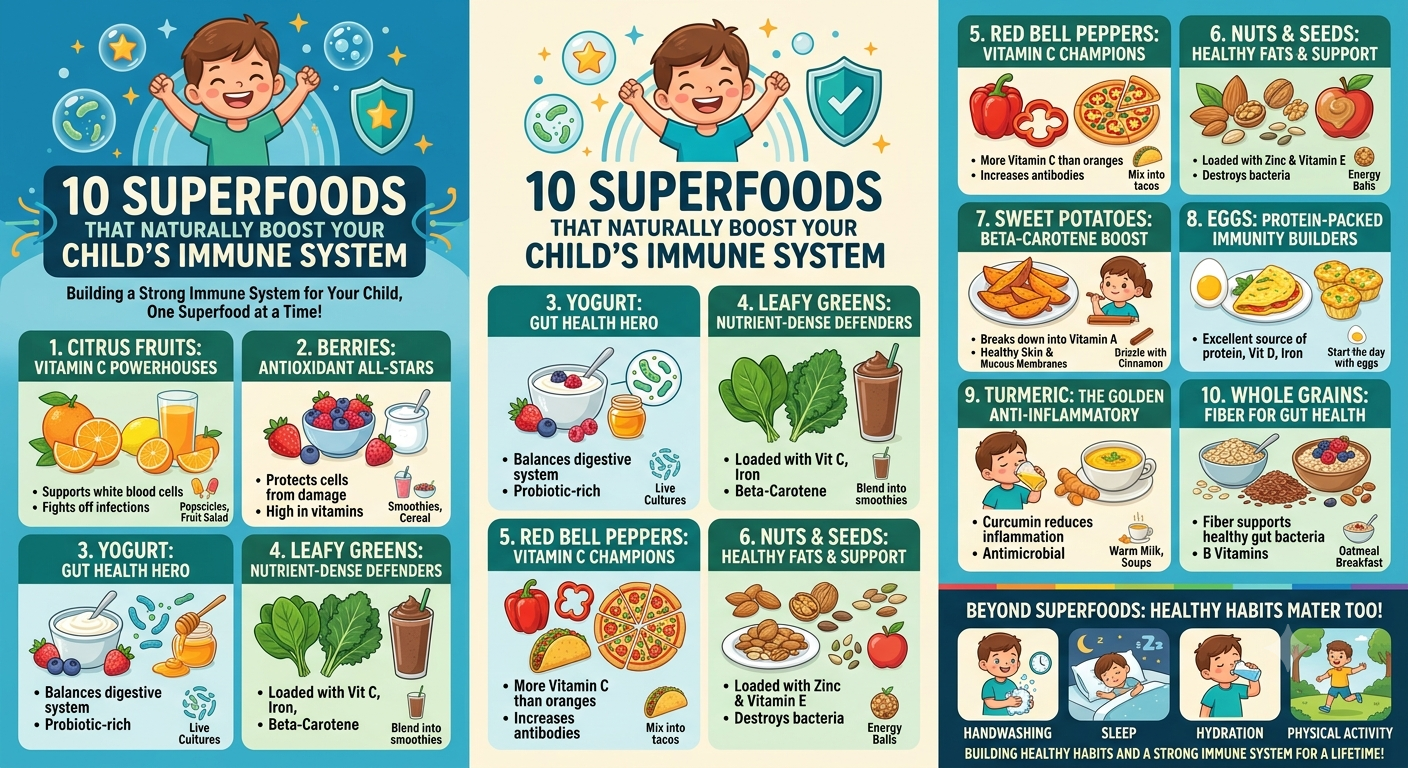
Superfoods That Naturally Boost Your Child’s Immune System :As a parent, you know the drill: your child starts a new school year, and within weeks, the sniffles, coughs, and colds begin. Children are naturally curious and active, often exposing themselves to germs and infections. While handwashing and sleep routines are crucial, what your child eats plays a significant role in building a strong immune system. Research shows that a balanced, nutrient-rich diet can help kids fight off infections and recover faster.
The good news? You don’t need expensive supplements or exotic ingredients. Most immune-boosting “superfoods” are everyday whole foods like berries, beans, and greens. Here are 10 science-backed superfoods to add to your child’s plate.
1. Citrus Fruits: Vitamin C Powerhouses
Oranges, grapefruits, lemons, and tangerines are packed with vitamin C, which supports white blood cell function and helps the body fight off infections. A glass of fresh orange juice in the morning or adding lemon to water can do wonders.
Pro tip: For fussy eaters, make popsicles with fresh citrus juice or create a colorful fruit salad with a variety of citrus fruits.
2. Berries: Antioxidant All-Stars
Strawberries, blueberries, and raspberries are rich in antioxidants and vitamins that protect cells from damage and support immune function. They are perfect for snacks, added to yogurt, cereal, or blended into smoothies.
Pro tip: Frozen berries are just as nutritious as fresh ones—keep a bag in the freezer for quick smoothies.
3. Yogurt: Gut Health Hero
A strong immune system begins in the gut. Probiotic-rich yogurt with live cultures contains good bacteria that help balance the digestive system, reduce inflammation, and boost resistance to infections—especially respiratory ones.
Pro tip: Choose plain, unsweetened yogurt and serve it with fresh fruits, a drizzle of honey, or blend it into smoothies.
4. Leafy Greens: Nutrient-Dense Defenders
Spinach, kale, and other dark leafy greens are loaded with vitamin C, vitamin K, iron, folate, and beta-carotene. These nutrients support immune cell production and help fight off infections. Kale is especially high in beta-carotene, which the body converts into vitamin A to fuel the immune system.
Pro tip: Blend spinach or kale into a chocolate smoothie with berries and nut butter. If it looks like a chocolate treat, most kids will drink it without even knowing the greens are in there.
5. Red Bell Peppers: Vitamin C Champions
Red bell peppers actually contain more vitamin C than oranges. They help increase the body’s supply of white blood cells and antibodies. Plus, their bright color and crunchy texture make them appealing to kids.
Pro tip: Chop peppers into tiny pieces and mix them into taco meat, or sauté and serve as a colorful topping on pizza or pasta.
6. Nuts and Seeds: Healthy Fats and Immune Support
Almonds, walnuts, sunflower seeds, flax, chia, and pumpkin seeds are loaded with zinc, vitamin E, and omega-3 fatty acids. Vitamin E enhances antibody-producing immune cells and helps destroy harmful bacteria. Zinc is essential for immune cell growth and function.
Pro tip: Offer them as trail mixes, homemade energy balls, or add them to cereals, yogurts, and smoothies. Blend nut or seed butter into smoothies or serve as a dip with sliced apples or bananas.
7. Sweet Potatoes: Beta-Carotene Boost
Sweet potatoes are packed with beta-carotene, a plant-based compound that breaks down into vitamin A in the body. Vitamin A is essential for healthy skin and mucous membranes—the body’s first line of defense against pathogens.
Pro tip: Roast sweet potato wedges with a drizzle of olive oil and a sprinkle of cinnamon for a naturally sweet, kid-friendly side dish.
8. Eggs: Protein-Packed Immunity Builders
Eggs are an excellent source of protein, iron, selenium, and vitamin D—all important for immune function. Protein is needed to make immune cells and antibodies.
Pro tip: A boiled egg or an omelette in the morning gives kids a great head start to the day. Egg muffins with vegetables are also a great make-ahead option.
9. Turmeric: The Golden Anti-Inflammatory
Turmeric contains curcumin, a compound with powerful anti-inflammatory and antimicrobial properties. A pinch of turmeric in warm milk is a time-tested remedy in many households.
Pro tip: Sneak turmeric into soups, stews, or pair it with sweeter flavors like sweet potato to make the warm, slightly bitter taste more palatable for kids.
10. Whole Grains: Fiber for Gut Health
Whole grains like oats, brown rice, millet, and whole wheat are rich in fiber, B vitamins, and essential minerals. These foods support the development of healthy gut bacteria, which in turn help regulate the immune response.
Pro tip: Start the day with a bowl of oatmeal topped with berries and a sprinkle of nuts for a fiber-rich, immune-boosting breakfast.
Beyond Superfoods: Healthy Habits Matter Too
While these superfoods are powerful tools, immune health is also about what we do daily:
- Handwashing: Teach kids to wash with soap for 20 seconds before eating, after using the bathroom, and after recess.
- Sleep: School-aged kids need 9–12 hours of sleep per night. Sleep deprivation weakens the immune system.
- Hydration: Water supports every system in the body, including immunity. Encourage sips throughout the day.
- Physical Activity: Exercise improves circulation and helps immune cells move efficiently.
Final Thoughts
Encouraging a varied diet rich in these immunity-boosting foods can help protect your child from frequent illnesses and support their overall development. The key is to make these foods fun, accessible, and part of your family’s routine. Get your kids involved—let them pick fruits and veggies at the store, help season food, and even plate their own meals. It makes them more likely to try new things.
By weaving immune-supporting foods and habits into your family’s daily life, you’re not just preparing for cold and flu season—you’re setting your child up for a lifetime of better health.
Read also
Things I Wish I Knew Before Having Kids (Honest Advice From a Real Mom)
