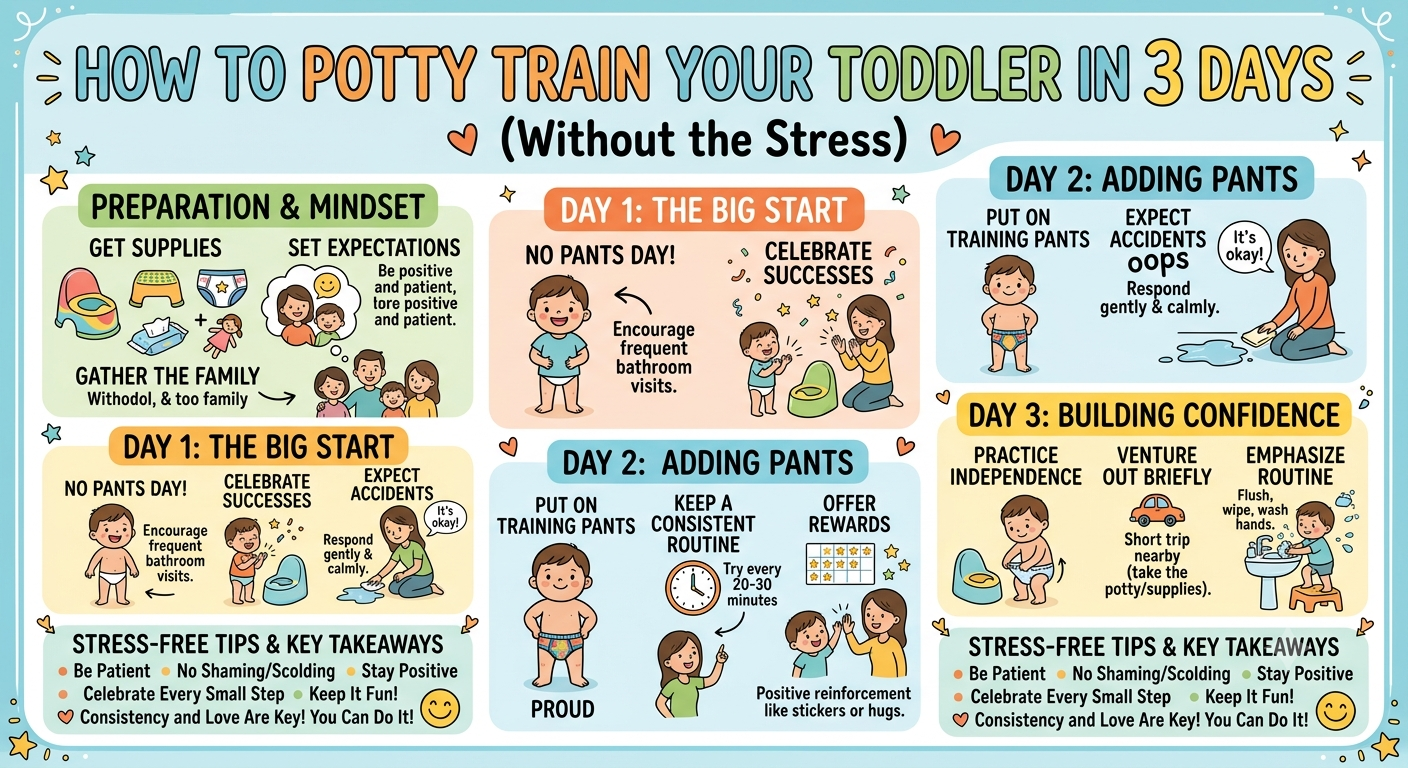
How to Potty Train Your Toddler in 3 Days :Potty training. Just the words can make any parent break into a cold sweat. The fear of accidents, the endless trips to the bathroom, the stubborn resistance—it’s enough to make you want to keep buying diapers forever.
But here’s the thing: it doesn’t have to be that way.
Potty training can be a smooth, even enjoyable, experience for both you and your toddler. And yes, you can do it in just three days.
This guide will walk you through a proven, stress-free method that has worked for thousands of parents. No fear. No stress. Just results.
Why the 3-Day Method Works
The 3-day potty training method is based on a simple principle: eliminate the distractions.
When you commit to three focused days, you send a clear message to your toddler: “This is important, and we’re doing this together.” It removes the confusion of on-and-off training and gives your child the consistency they need to learn.
According to child development experts, most toddlers are ready for potty training between 18 and 36 months. The key is recognizing the signs of readiness and then committing fully to the process.
Step 1: Know If Your Toddler Is Ready
Before you start, make sure your child is actually ready. Pushing a child who isn’t ready will only lead to frustration for both of you.
Signs of Readiness
Your toddler may be ready if they:
- Stay dry for at least two hours at a time
- Tell you when they are wet or have pooped
- Show interest in the potty or in wearing underwear
- Can follow simple instructions
- Dislike being in a dirty diaper
- Can pull their pants up and down
The most important thing to remember: Every child is different. Some are ready at 18 months, others at 3 years. There is no “right” age.
Step 2: Prepare for the Big Day
Preparation is the secret to success. Don’t just dive in—take the time to set yourself up for a smooth experience.
What You’ll Need
Before you start, gather these supplies:
- 10-15 pairs of training pants or underwear – You will go through a lot of them
- A potty chair or potty seat – Let your child pick one out if possible
- Easy-to-remove clothing – Avoid overalls, onesies, or anything with complicated buttons
- Rewards – Stickers, small toys, or a special treat for successes
- A timer – For regular potty breaks
- Books or toys – To keep your child occupied while sitting on the potty
- Patience – Lots and lots of patience
Set Your Expectations
This is important: accidents will happen. They are part of the process, not a sign of failure. Plan for them, accept them, and move on without making your child feel bad.
Step 3: The 3-Day Plan
Here is a day-by-day breakdown of the three-day potty training method.
Day 1: The Naked Day
The goal: Help your child make the connection between the feeling of needing to go and actually going.
- Start the day by removing diapers. Let your child go without pants or underwear for the entire day. This helps them become more aware of their body’s signals.
- Watch your child closely. You will quickly start to notice the signs that they need to go—squirming, holding themselves, a sudden pause in play.
- Say the magic words: “Let’s go try the potty!” Say this every time you see a signal. If they have an accident, say, “Oops, pee goes in the potty. Let’s try sitting on the potty next time.”
- Take them to the potty regularly. Set a timer for every 15-20 minutes and have them sit on the potty for a few minutes, even if they don’t go.
- Celebrate successes. When they do go in the potty, make a big deal out of it. Clap, cheer, give a sticker. This positive reinforcement is crucial.
- Stay calm during accidents. If they have an accident (and they will), calmly clean it up without making your child feel ashamed. Say something like, “It’s okay, you’re still learning. Next time we’ll try to get to the potty.”
Day 2: The Underwear Day
The goal: Help your child learn to stay dry while wearing underwear.
- Continue the routine. Keep the potty schedule from Day 1, but now have your child wear underwear or training pants.
- Remind them often. “Remember, you’re wearing big-kid underwear now. If you feel the need to go, run to the potty!”
- Continue with the timer. Keep the 15-20 minute potty schedule for the first half of the day. By the second half, you can start gradually increasing the time.
- Celebrate dry underwear. If you notice that your child has stayed dry for a while, praise them. “Wow, look at you! You’re keeping your underwear so dry!”
- Handle accidents with grace. Accidents will still happen. Follow the same calm approach as Day 1. Do not show frustration or anger—this can create anxiety around potty training.
Day 3: The Independence Day
The goal: Help your child start recognizing the need to go on their own.
- Let your child take the lead. Now that they have two days of experience, start stepping back. Let them tell you when they need to go.
- Continue with prompts, but not over-prompts. Don’t stop reminding them, but don’t ask every five minutes. Try saying, “I’m going to potty now. Do you need to go?”
- Be ready for a potential regression. It is very common for toddlers to have a small regression on this day. They may have more accidents. This is not a failure—it’s part of the learning process.
- Keep celebrating successes. Continue with the stickers, cheers, and rewards.
What to Do After the 3 Days
The 3-day method is just the beginning. Your child will still need reminders and support for weeks or even months after. Here’s how to handle the transition:
Going Out
- Take a portable potty or potty seat with you
- Use bathroom breaks strategically – Before you leave, upon arrival, and before you head home
- Bring a change of clothes – Just in case
Nighttime Training
Nighttime training usually takes longer than daytime training. Most children become dry at night between the ages of 3 and 5. Be patient and keep using training pants at night until your child consistently wakes up dry.
Regression
If your child has a regression—more accidents after being successful—don’t panic. This is normal and often triggered by stress, a change in routine, or a new sibling. Go back to the basics, and stay calm.
Common Potty Training Myths (Debunked)
Myth 1: You Can Potty Train in One Day
While some children can learn quickly, the 3-day method is the most realistic timeline for complete training. Some children will need more time.
Myth 2: Boys Are Harder to Train
This is a common myth with little evidence to back it up. The biggest difference is often that boys are ready slightly later than girls. Patience and consistency are key for both.
Myth 3: You Should Wait Until Your Child is Completely Ready
It is generally best to start when your child shows signs of readiness. If you wait until they are 100% ready, you could be waiting a very long time. A gentle push in the right direction can help them learn.
Myth 4: Punishment Speeds Up the Process
This is completely false. Punishment will only make your child fearful and create a negative association with the potty. Positive reinforcement is the most effective approach.
Myth 5: Potty Training is Always Stressful
It doesn’t have to be. By following a proven method, staying calm, and maintaining realistic expectations, you can transform potty training from a stressful experience into a successful milestone.
Tips for a Stress-Free Experience
1. Stay Positive
Your attitude sets the tone. If you are stressed, your child will be stressed. Stay relaxed, encouraging, and positive.
2. Make It Fun
Let your child pick out their own underwear, read potty books together, and sing songs while they sit on the potty. The more fun it is, the less resistance you’ll face.
3. Use Their Favorite Activity
If your child loves a certain toy or book, make it a “potty-only” activity. This gives them a strong incentive to sit on the potty.
4. Let Them See You
Toddlers learn by watching. Let them see you or an older sibling use the toilet. This normalizes the process and helps them understand what is expected.
5. Don’t Compare
Every child learns at their own pace. Avoid comparing your child to siblings, friends, or neighborhood children.
6. Trust the Process
Some days will be better than others. Stay consistent with the method and trust that your child will get there.
What to Avoid During Potty Training
1. Avoid Punishment
As mentioned, punishment can create fear and anxiety. It does not help your child learn faster.
2. Avoid Pressure
Forcing your child to sit on the potty for extended periods or demanding they use it before they are ready creates resistance and stress.
3. Avoid Starting During a Stressful Time
Don’t start training during a major life event such as a move, a new baby, or starting daycare. Your child’s nervous system will be heightened, and they will be less willing to learn something new.
4. Avoid Pull-Ups During the Day
Pull-ups feel too much like diapers. Using them during the day can confuse your child. Reserve pull-ups for nighttime, if needed.
5. Avoid Negative Language
Instead of saying “You’re being a baby” or “This is disgusting,” use gentle, encouraging language.
When to See a Doctor
Most children learn to use the potty, but there are some cases where you should consult your doctor. Seek advice if:
- Your child is over 4 and hasn’t shown interest in potty training
- Your child is over 5 and is still having frequent accidents during the day
- Your child experiences severe pain while trying to poop
- Your child refuses to sit on the potty after several attempts
- Your child begins wetting themselves again after being successfully trained
A doctor can identify any underlying physical or emotional factors that may be affecting your child’s potty training progress.
Frequently Asked Questions
What is the 3-day potty training method?
The 3-day method is a focused approach where you dedicate three full days to potty training. Your child stays home, wears no diapers, and is taken to the potty regularly. The goal is to help them make the connection between the feeling of needing to go and actually using the potty.
Can I really potty train in 3 days?
Yes. Many parents have successfully used this method. However, every child is different. While most children learn the basics in three days, some may need more time for the skills to become fully established.
What if my child has an accident?
Accidents are a normal part of the learning process. Stay calm, clean it up, and reassure your child. Do not show frustration or anger.
What if my child fights me every time I try to put them on the potty?
If your child is fighting you, take a step back. You may be pushing too hard. Try making the potty more inviting with fun activities, and make it their choice to sit on the potty rather than a battle of wills.
When is the best time to start potty training?
The best time is when your child shows signs of readiness, which is usually between 18 and 36 months. Avoid starting during stressful times like a move, a new baby, or starting daycare.
Is it better to use a potty chair or a potty seat?
This depends on your child’s preference. A potty chair is portable and can be placed anywhere, making it easier for your child to access quickly. A potty seat on the regular toilet can help your child transition to the “big potty” sooner.
What should I do if my child has a regression?
Regression is common. It often occurs during stressful times or when there is a change in routine. Go back to basics, stay calm, and reinforce the positive behavior.
Final Thoughts
Potty training is a significant milestone, both for you and your child. It can feel overwhelming at first, but with the right approach, it can be a rewarding experience that brings you closer.
The 3-day method has worked for thousands of families—and it can work for yours too.
Remember these key points:
- Prepare properly – Have all your supplies ready before you start
- Stay consistent – Stick to the plan for the full three days
- Stay positive – Celebrate successes and treat accidents as learning moments
- Trust your child – They will get there in their own time
Read also
How to Get Your Toddler to Eat Vegetables (Without Bribery)
