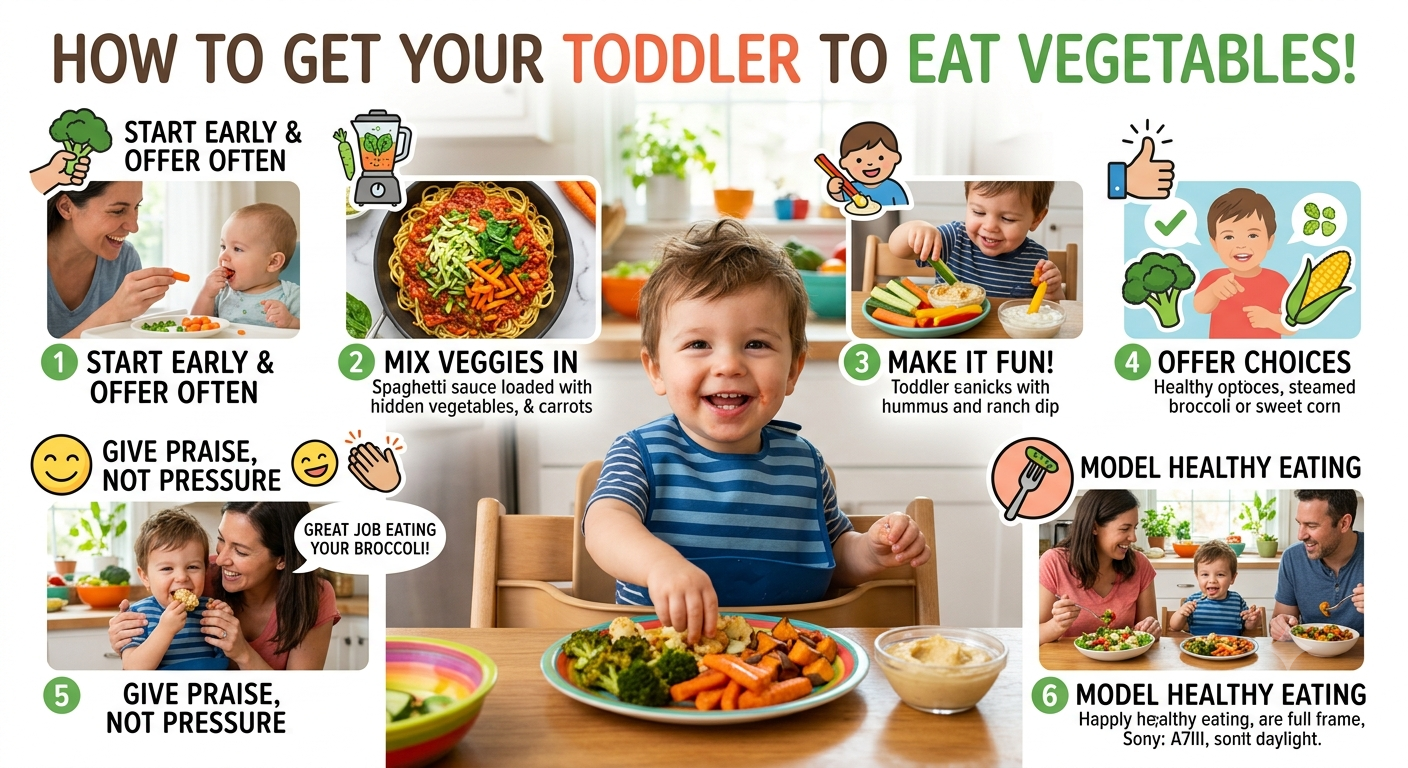
How to Get Your Toddler to Eat Vegetables :If you have a toddler, you have probably experienced it: the plate of carefully steamed broccoli pushed aside. The lovingly arranged carrot sticks left untouched. The peas that somehow ended up on the floor, not in the mouth.
Getting toddlers to eat vegetables can feel like an impossible battle. And the easiest solution—bribery—often backfires in the long run. It teaches children that vegetables are punishment, treats are rewards, and eating is a negotiation.
But there is a better way.
Here is how to encourage your toddler to eat vegetables without resorting to bribery, threats, or tears.
First, Understand the Toddler Mindset
Before you can win the vegetable battle, you need to understand what you are up against.
Toddlers Are Naturally Suspicious
Food neophobia—the fear of new foods—is a normal developmental stage in toddlers. Between the ages of 2 and 6, children naturally become more cautious about unfamiliar foods. This is not defiance. It is survival instinct. Your toddler is not trying to be difficult. Their brain is telling them, “I don’t know what that is. Is it safe?”
Toddlers Are Limited in What They Can Eat
A toddler’s stomach is about the size of their fist. They simply cannot eat large portions. This means every bite counts, and if they fill up on less nutritious foods, they will have less room for vegetables.
Toddlers Seek Control
Toddlers are discovering their independence. Refusing food is one of the few ways they can exert control over their lives. The more pressure you apply, the more they will resist.
Toddlers Are Sensitive to Taste and Texture
Children have more taste buds than adults, which means flavors can be overwhelming. Bitter flavors—common in many vegetables—are particularly unappealing to young taste buds.
The Long-Term Goal: Raise a Healthy Eater
Before we get into specific strategies, it helps to clarify the ultimate goal. Your goal is not to get your toddler to eat broccoli tonight. Your goal is to raise a healthy eater who eventually chooses vegetables willingly.
This shift in perspective changes everything. You are not fighting a daily battle. You are building a lifelong relationship with food.
Strategies That Actually Work (No Bribery Required)
1. Lead by Example
Children learn by watching. If you want your toddler to eat vegetables, they need to see you eating vegetables—and enjoying them.
This means:
- Eating vegetables at the same table
- Showing enthusiasm for the food on your own plate
- Not making faces when you eat something you do not love
- Eating together as a family whenever possible
Your toddler may not copy you immediately, but they are watching. Over time, they will become more curious about what is on your plate.
2. Start Early
The earlier you introduce vegetables, the more familiar they become. Babies who are introduced to a variety of vegetables during weaning are more likely to accept them as toddlers.
Even if you are past the weaning stage, it is never too late to start. Consistency matters more than timing.
3. Offer Vegetables First
Serve vegetables before anything else on the plate. When toddlers are hungriest, they are more willing to try new foods. The main course and carbs can wait until they have had a few bites of vegetables.
4. Make Vegetables Fun
Presentation matters. Try:
- Cutting vegetables into fun shapes with cookie cutters
- Arranging them into faces or patterns on the plate
- Serving them in colorful bowls
- Letting toddlers help arrange their own plates
- Serving veggies with a fun dip like hummus or yogurt-based dressing
5. Involve Your Toddler in Food Preparation
Toddlers are much more likely to eat something they helped make. Let them:
- Wash vegetables in the sink
- Stir a salad
- Snap green beans
- Sprinkle herbs or cheese on vegetables
- Pick vegetables at the grocery store or farmers market
The more ownership they feel over the food, the more likely they are to eat it.
6. Serve Vegetables in Different Ways
If your toddler rejects roasted broccoli, try steamed. If they reject steamed, try raw. If they reject raw, try pureed into a sauce. Experiment with different:
- Textures (crunchy, soft, smooth, chunky)
- Temperatures (warm, room temperature, cold)
- Flavors (plain, seasoned, sweetened, savory)
- Shapes (sticks, rounds, spirals, diced, pureed)
Some toddlers prefer vegetables cold. Some prefer them warm. Some prefer them crunchy. The only way to find out is to experiment.
7. Hide Vegetables (Strategically)
While the goal is for your toddler to accept vegetables openly, there is nothing wrong with sneaking extra vegetables into meals—especially during the toddler years when they are particularly resistant.
Try:
- Pureeing vegetables into sauces (tomato sauce, cheese sauce)
- Adding grated vegetables to meatballs, burgers, or meatloaf
- Blending vegetables into smoothies
- Adding finely chopped vegetables to scrambled eggs or omelets
- Using vegetable purees in baked goods like muffins or pancakes
8. Pair Vegetables with Foods They Already Like
Mixing new foods with familiar favorites can increase acceptance:
- Serve vegetables alongside a favorite dip
- Add vegetables to a familiar dish like pasta or soup
- Place vegetables next to a food they love
If a child sees a vegetable paired with a trusted food, they are more likely to trust it.
9. Use the “One Bite” Rule (Without Pressure)
The “one bite” rule can be effective, but the approach matters. Instead of demanding, “Eat your vegetables,” try:
- “Just lick it first to see if you like it.”
- “Just taste a tiny piece.”
- “Take one bite and if you really do not like it, that is okay.”
The key is to remove the pressure. They can try it and decide they do not like it. The goal is not to force them to eat the whole plate. It is simply to expose them to the taste.
10. Be Patient and Persistent
Research shows that it can take up to 15-20 exposures for a child to accept a new food. That is 15-20 separate opportunities to see, smell, touch, and taste a vegetable before they decide they like it.
This means you need to keep offering—without pressure—even when they reject it repeatedly. Every exposure is progress, even if it does not look like it.
11. Avoid the “Clean Plate” Rule
Forcing children to finish their vegetables can create negative associations and resistance. Instead, let them decide how much to eat. Trust their internal hunger cues.
12. Use the “Eat One, Leave One” Approach
Some parents have success with the “eat one, leave one” approach: “You do not have to eat all your broccoli. You just need to try one. Then you can leave the rest.” This removes the power struggle while still encouraging exposure.
13. Do Not Forget About Familiarity and Modeling
Some research suggests that children are more likely to eat vegetables when they see their peers or family members eating them. Eating together as a family and modeling positive eating behaviors can be one of the most effective strategies.
What Not to Do
1. Do Not Bribe
“Eat your broccoli and you can have dessert.” This teaches your child that broccoli is the price they pay for something good. It makes vegetables the enemy and dessert the reward.
2. Do Not Force
Force-feeding creates negative associations with food. It can also lead to power struggles that make eating a battle. When children feel pressured, they resist.
3. Do Not Make a Big Deal
If you act anxious or frustrated about vegetables, your toddler will notice. Toddlers are experts at reading their parents’ emotions. The more stressed you are, the more stressed they become.
4. Do Not Label Your Toddler as Picky
Labels can become self-fulfilling prophecies. If you tell your toddler they are picky, they may start to believe it. Use neutral language: “You are still learning to like vegetables.”
5. Do Not Give Up
It is easy to get discouraged when your toddler rejects vegetables repeatedly. But giving up only reinforces the idea that vegetables are not part of your family’s diet. Keep offering.
What If Your Toddler Refuses Vegetables?
First, take a breath. This is normal.
- Many toddlers go through phases of refusing vegetables. They are not being difficult. They are being developmentally appropriate.
- Try not to stress. Research from the University of Michigan School of Public Health found that 7 to 10 exposures to a vegetable can drastically increase a toddler’s willingness to try it. Keep offering.
- Focus on what they are eating, not what they are not. If they are getting some nutrients from other foods, that is okay. They will not have nutritional deficiencies from a few weeks of picky eating.
What to Do If Your Toddler Is Extremely Picky
Some toddlers are more resistant than others. If your toddler is extremely picky and the above strategies are not working, consider:
- Occupational therapy for sensory processing issues
- Feeding therapy with a specialist
- Working with a pediatric dietitian who can help with feeding challenges
These professionals can help identify the root cause of food refusal and develop targeted strategies.
Long-Term Perspective
Remember: childhood eating is not a snapshot. It is a long, winding path. The toddler who refuses vegetables today may grow into a teenager who eats a garden salad by choice.
In fact, studies show that when children are exposed to a wide variety of foods and are allowed to decide what to eat without pressure, they are more likely to develop a healthy relationship with food.
The goal is not perfection. The goal is progress.
Your toddler will not eat vegetables at every meal. They will have days when they eat nothing but crackers. They will go through phases where they reject previously loved foods. This is normal.
What matters is the long arc: a parent who offers vegetables consistently, without pressure, and trusts that their child is capable of learning to eat a variety of foods.
Quick Vegetable Tips for Busy Parents
- Freeze vegetables – Stock up on frozen veggies to have on hand for quick meals
- Batch cook – Roast a batch of vegetables at the start of the week to serve with multiple meals
- Use leftovers – Add leftover vegetables to soups, pasta, or omelets
- Buy pre-cut – Pre-cut vegetables can save time and make serving easier
- Keep it simple – Steamed or roasted vegetables with a drizzle of olive oil and a sprinkle of salt are delicious and easy
Final Thoughts
Getting toddlers to eat vegetables is not about winning a battle. It is about building a lifelong relationship with food. It is about helping children feel safe, curious, and empowered to try new things.
You are not failing if your toddler rejects a vegetable. You are succeeding every time you offer it again without pressure, without punishment, and without bribery.
Keep offering. Keep modeling. Keep trusting your child.
Over time, the pressure will ease, and they will learn to enjoy the vegetables you have been serving all along.
Frequently Asked Questions
What if my toddler simply refuses all vegetables?
This is normal. Many toddlers go through phases of refusing vegetables. Keep offering them without pressure, get creative with how you serve them, and remember that exposure matters more than consumption at this stage. They will not have nutritional deficiencies from a few weeks of picky eating.
How many times do I need to offer a vegetable before my toddler will eat it?
Research suggests it can take 10-15 exposures before a toddler accepts a new food. It can take up to 20 times for some children. Keep offering without pressure.
Is it okay to hide vegetables in food?
Yes. While the goal is for your toddler to eventually accept vegetables openly, hiding them in sauces, meatballs, smoothies, and baked goods is a valid strategy during the toddler years.
What if my toddler only wants to eat one or two foods?
This is common in toddlers. The best approach is to keep offering a variety of foods alongside their favorites, model healthy eating yourself, and avoid making mealtimes stressful.
Is it okay to bribe my child to eat vegetables?
Bribery teaches children that vegetables are the price they pay for something good. It can reinforce the idea that vegetables are not enjoyable. It is better to avoid bribery and focus on consistent exposure and positive modeling.
Should I force my child to eat vegetables?
No. Forcing children to eat can lead to negative associations with food and power struggles. It also does not work in the long run.
My toddler eats vegetables at daycare but not at home. Why?
This is common and is often about peer influence, routine, or the lack of pressure at daycare. There is no reason to be concerned. Children are often more willing to eat at daycare because of peer modeling.
What are the easiest vegetables to start with?
Start with sweeter vegetables like sweet potatoes, carrots, peas, and corn. These tend to be more palatable to toddlers than bitter vegetables.
What if my toddler gags on a vegetable?
Gagging is a normal reflex for toddlers learning to eat new textures. Continue to offer the vegetable in different forms (cooked, raw, pureed) to help them adjust.
How much should my toddler be eating?
Every child is different. Research suggests that if a child is growing well, has enough energy, and is meeting developmental milestones, they are likely eating enough. Let them decide how much to eat at each meal.
Additional Resources
- American Academy of Pediatrics (AAP) – Offers guidelines for feeding children
- Ellyn Satter’s Division of Responsibility in Feeding – A useful framework for parents
- Feeding therapists and pediatric dietitians – Can provide support for more severe feeding challenges
A Final Reminder
You are doing an incredible job. Feeding a toddler is hard work, and it is okay if it feels overwhelming sometimes. The fact that you are reading this article means you care. That alone puts you ahead of the game.
Your toddler will not remember every meal you served. They will not remember every vegetable they rejected. They will remember the love, the laughter, and the feeling of being safe and cared for.
